
How to Enroll in Medicare in 2026: Eligibility, Timing, and Next Steps
Getting Medicare coverage depends on your age, eligibility, and when you enroll. Most people qualify at 65, while others may qualify earlier due to a disability or certain medical conditions. This guide explains when to apply, how to enroll in Medicare in 2026, and what to do after you get coverage.

Who Qualifies for Medicare?
Most people qualify for Medicare when they turn 65.
You may also qualify earlier if you receive Social Security disability benefits for 24 months or if you have certain medical conditions, including ALS or ESRD.
Who Qualifies | When Coverage Begins |
|---|---|
| Age 65 | Around your 65th birthday |
| Social Security disability for 24 months | Month 25 |
| ALS | Immediately after disability benefits begin |
| ESRD | Depends on treatment timeline |
How to Apply for Medicare
To learn how to enroll in Medicare in 2026, visit the Social Security Administration website, call Social Security, or go to a local office. Most people apply online because it’s the fastest and most convenient option.
How to Enroll in Medicare in 2026
You can enroll in Medicare in 2026 online through the Social Security Administration website by:
1. Creating or signing in to your account.
2. Once logged in, complete the Medicare application, upload any required documents, and submit your information.
3. After processing, you’ll receive confirmation along with details about your coverage and next steps.
When to Apply for Medicare
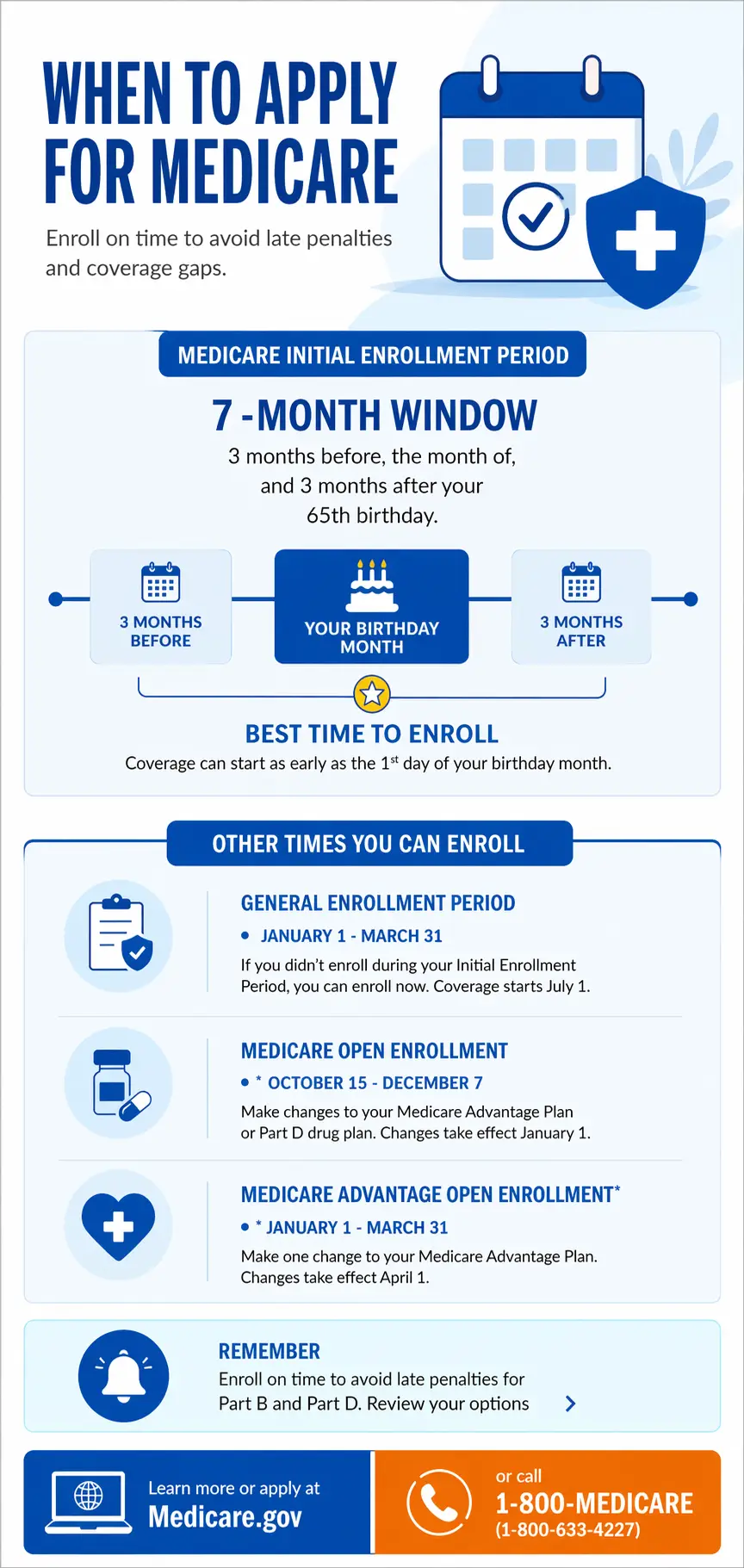
Sign up during your Initial Enrollment Period, which is a 7-month window that opens 3 months before your 65th birthday and closes 3 months after.
If you delay enrolling in Medicare without qualifying employer coverage, you could face lifelong late penalties. Medicare adds a permanent 10% penalty to your Part B premium for every full year you wait after becoming eligible. In 2026, that equals about $20.29 more per month for each year delayed, and the penalty never goes away.
Part D also has a separate late enrollment penalty of 1% of the national base premium for every month you go without creditable prescription drug coverage.
The best way to avoid both penalties is to enroll on time.
| Years delayed | Monthly penalty added | Extra cost per year |
|---|---|---|
| 1 year | +$20.29/mo | $243.48 extra |
| 2 years | +$40.58/mo | $486.96 extra |
| 3 years | +$60.87/mo | $730.44 extra |
Source: Medicare.gov. Based on the 2026 standard Part B premium of $202.90/mo. Penalties are permanent.
Initial Enrollment Period
This is your first opportunity to enroll in Medicare when you turn 65. It lasts for seven months: three months before your birthday month, your birthday month, and three months after. Enrolling during this window ensures your coverage starts on time and helps you avoid late enrollment penalties.
General Enrollment Period
The General Enrollment Period runs from January 1 to March 31 each year. This is for people who missed their Initial Enrollment Period. Coverage begins the first day of the month after you enroll. Depending on your situation, you may face a late enrollment penalty added to your monthly premium.
Medicare Open Enrollment
Medicare Open Enrollment runs from October 15 to December 7 each year. During this period, you can review your current coverage and make changes — such as switching plans, adding prescription drug coverage, or moving from Original Medicare to a Medicare Advantage plan. Changes take effect January 1.
Medicare Advantage Open Enrollment
From January 1 to March 31, people already enrolled in a Medicare Advantage plan can make a one-time change. You can switch to a different Medicare Advantage plan or return to Original Medicare, with the option to add a standalone Part D prescription drug plan.
Special Enrollment Period (SEP)
A Special Enrollment Period allows you to enroll in Medicare outside the standard enrollment windows if you experience a qualifying life event. Common qualifying events include losing employer-sponsored health coverage, moving to a new area, or losing Medicaid eligibility.
Most SEPs give you an 8-month window to enroll in Medicare Part B after your employer coverage ends. Enrolling during your SEP lets you avoid the late enrollment penalties you would face if you waited for the General Enrollment Period.
When You Receive Your Medicare Card
After approval, your Medicare card is typically mailed a few months before your coverage begins.
In most cases, coverage starts on the first day of your birthday month, and some individuals are automatically enrolled if they already receive Social Security benefits.
2026 Medicare Costs at a Glance
| Coverage | 2026 Cost |
|---|---|
| Part A premium | $0 for most people |
| Part A deductible | $1,676 per benefit period |
| Part B premium | $185.00/month (standard) |
| Part B deductible | $257/year |
| Late Part B penalty | 10% added per 12-month period missed |
| Late Part D penalty | 1% of national base premium per month missed |
What Happens After You Get Medicare Coverage
After you receive Medicare, you may need additional coverage to better manage your healthcare costs.
Many beneficiaries enroll in a Medicare Part D prescription drug plan, select a Medicare Advantage (Part C) plan for additional benefits, or choose a Medigap (Medicare Supplement Insurance) policy to lower out-of-pocket costs like deductibles, copayments, and coinsurance.
Reviewing your Medicare plan options and coverage choices early can help you avoid gaps in coverage and select the best plan for your needs.
Your enrollment window may already be open.
A licensed insurance agent can check your eligibility and walk you
through your options at no cost and no obligation.
TTY: 711
Medicare Advantage vs Medigap: What’s the Difference?
Choosing between Medicare Advantage and Medigap is one of the most important decisions after enrollment.
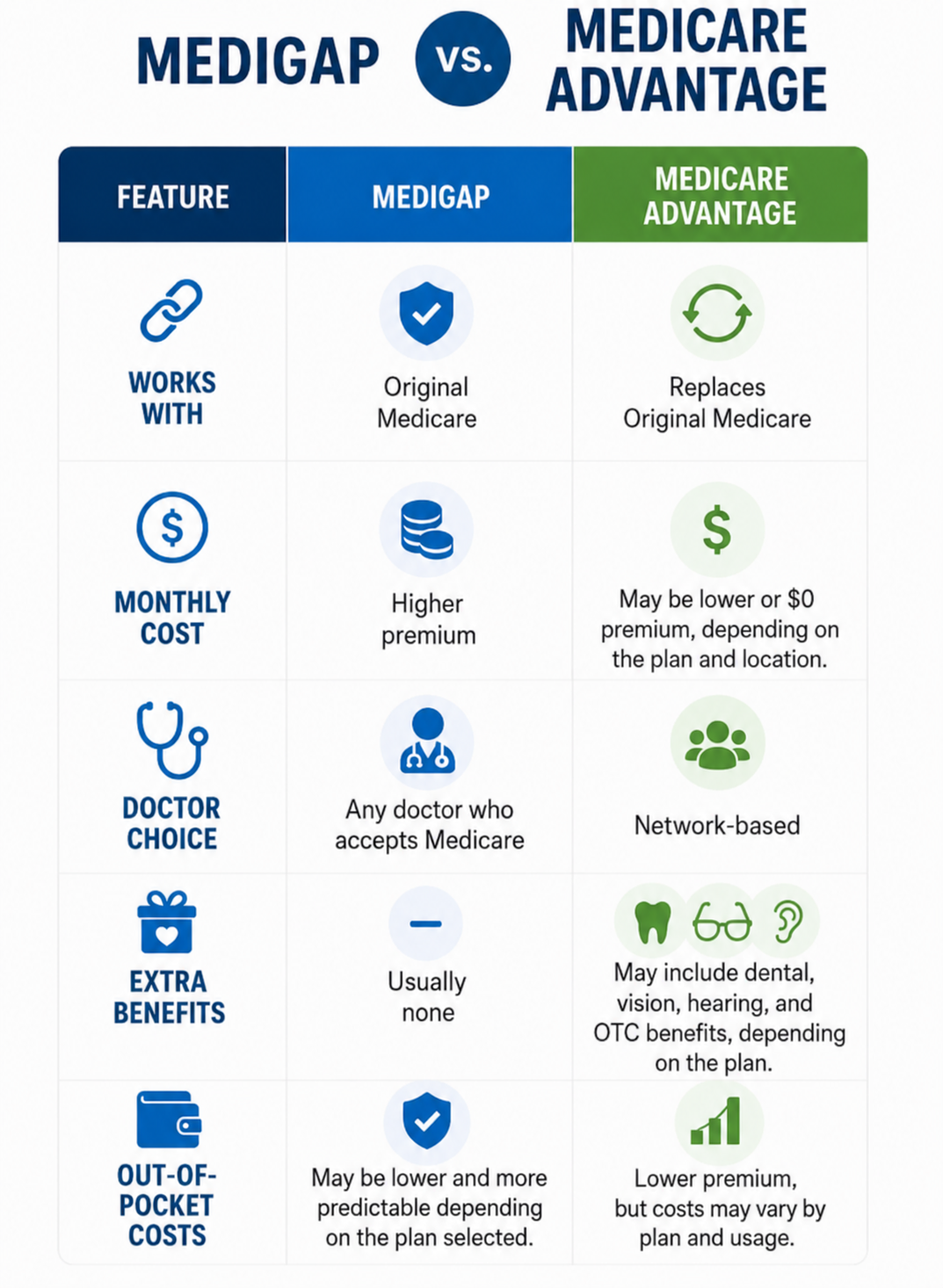
Medicare Advantage plans may offer lower monthly costs and may include extra benefits such as dental, vision, or hearing coverage, depending on the plan
Medigap may provide greater provider flexibility and more predictable out-of-pocket costs, depending on the plan selected
Comparing your options early helps you avoid coverage gaps and choose the right long-term plan.
Not sure which plan fits your situation?
We can compare Medicare Advantage and Medigap plans available in your area
at no cost and no obligation.
Call (954) 737-4110
TTY: 711
Frequently Asked Questions
How do I enroll in Medicare in 2026 for the first time?
The first step is to confirm eligibility and apply through the Social Security Administration.
Do I automatically get Medicare at 65?
You may get Medicare automatically if you already receive Social Security or Railroad Retirement benefits. Otherwise, you must apply.
When should I apply for Medicare?
You should apply during your Initial Enrollment Period, which begins 3 months before your 65th birthday
How long does Medicare approval take?
Most Medicare applications are approved within two to four weeks, although timing may vary.
What is the difference between Medicare Advantage and Medigap?
Medicare Advantage combines your coverage into one plan with extra benefits, while Medigap works with Original Medicare to lower out-of-pocket costs.
Final Thoughts
Learning how to enroll in Medicare in 2026 comes down to understanding eligibility, applying at the right time, and choosing the right coverage after enrollment.
By following these steps carefully, you can avoid penalties and ensure your healthcare coverage starts without delays.
MULTIPLAN_050526SEOOM2_M
Get Help Enrolling in Medicare
Speak with a licensed insurance agent today.
No cost and no obligation to you
(954) 737-4110 | TTY: 711